CATEGORY: Eco-Friendly Cleaning
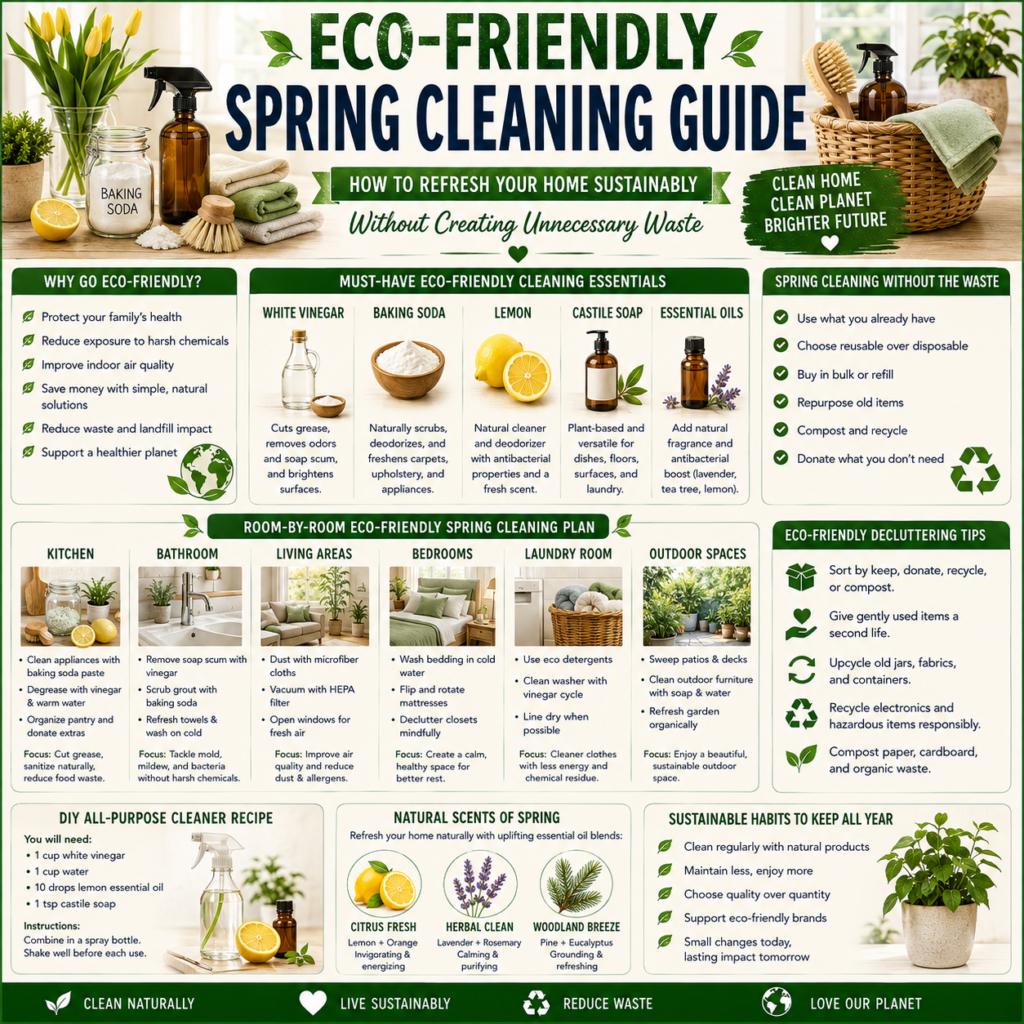
Spring cleaning has long been associated with fresh starts, brighter homes, and the opportunity to remove the dust and clutter that naturally accumulate throughout the colder months. While the tradition remains as valuable today as ever, modern spring cleaning can also become an opportunity to reduce waste, improve energy efficiency, organize the home, and adopt more sustainable habits.
Eco-friendly spring cleaning is about much more than replacing one cleaning product with another. It encourages homeowners to rethink how they clean, organize, repair, recycle, and maintain their homes. By focusing on reusable tools, responsible product choices, waste reduction, and preventive maintenance, spring cleaning becomes an investment in both your home and the environment.
Rather than treating spring cleaning as an exhausting annual task, this guide shows how to approach it methodically, efficiently, and sustainably while creating a healthier and more comfortable living space.
Why Spring Cleaning Still Matters
After months of closed windows, increased indoor activity, and seasonal weather, many homes benefit from a thorough refresh.
Spring cleaning provides an opportunity to:
- Remove accumulated dust.
- Organize living spaces.
- Improve indoor air quality.
- Check for maintenance issues.
- Declutter unnecessary belongings.
- Prepare the home for warmer weather.
When approached gradually, spring cleaning becomes far more manageable than attempting everything in a single weekend.
Start with a Plan
One of the biggest mistakes homeowners make is cleaning without a clear strategy.
Instead, divide your home into manageable sections.
For example:
- Kitchen
- Bathrooms
- Bedrooms
- Living room
- Dining room
- Hallways
- Utility room
- Outdoor spaces
Completing one area at a time creates visible progress while preventing fatigue.
Declutter Before Cleaning
Cleaning becomes significantly easier when unnecessary items have been removed first.
Go through each room and separate belongings into categories such as:
Keep
Items used regularly or with genuine long-term value.
Donate
Clean, usable items that others may benefit from.
Recycle
Materials accepted by local recycling facilities.
Dispose Responsibly
Items that cannot reasonably be reused or recycled.
Decluttering first reduces the amount of time spent cleaning around unnecessary possessions.
Open Windows and Improve Ventilation
Fresh air plays an important role in spring cleaning.
Whenever weather conditions allow:
- Open windows.
- Improve airflow.
- Allow moisture to escape.
- Refresh indoor spaces naturally.
Proper ventilation also helps reduce stale indoor air and supports a more pleasant cleaning environment.
Dust from Top to Bottom
Working in the correct order improves efficiency.
Begin with higher surfaces such as:
- Ceiling corners.
- Light fittings.
- Shelves.
- Picture frames.
- Curtain rails.
Finish with floors last.
This approach prevents dust from settling onto already-cleaned surfaces.
Refresh Soft Furnishings
Spring is an ideal time to care for fabrics throughout the home.
Consider:
- Washing curtains according to care instructions.
- Vacuuming upholstered furniture.
- Rotating mattresses.
- Washing cushion covers.
- Cleaning pet bedding.
Regular fabric care improves both cleanliness and indoor comfort.
Organize Storage Areas
Cupboards, wardrobes, and storage spaces often become cluttered over time.
During spring cleaning:
- Remove everything from one area at a time.
- Wipe shelves.
- Return only necessary items.
- Organize similar products together.
- Dispose of expired household products responsibly.
Well-organized storage reduces duplicate purchases and makes everyday life easier.
Deep Clean the Kitchen
The kitchen often deserves special attention during seasonal cleaning.
Tasks may include:
Refrigerator
Remove expired food and clean shelves.
Oven
Follow the manufacturer’s instructions for deep cleaning.
Cupboards
Wipe interior shelves and reorganize stored items.
Small Appliances
Clean toasters, kettles, coffee machines, and other frequently used appliances.
Keeping appliances clean also helps maintain their performance.
Refresh the Bathroom
Bathrooms benefit from seasonal maintenance.
Focus on:
- Cleaning grout.
- Washing shower curtains where appropriate.
- Organizing toiletries.
- Cleaning ventilation covers.
- Inspecting sealants.
- Removing unnecessary products.
Regular maintenance helps preserve both appearance and functionality.
Check Household Maintenance
Spring cleaning is also an opportunity to inspect your home.
Look for:
- Leaking taps.
- Loose handles.
- Worn seals.
- Damaged weather stripping.
- Smoke alarm batteries.
- Air vents requiring cleaning.
Addressing small problems early often prevents more expensive repairs later.
Reduce Waste During Cleaning
Sustainable spring cleaning emphasizes thoughtful consumption.
Helpful habits include:
- Using reusable cloths.
- Refilling existing spray bottles.
- Choosing concentrated products.
- Recycling packaging where possible.
- Donating unwanted household items.
Reducing waste begins with careful planning rather than purchasing new products unnecessarily.
Refresh Outdoor Spaces
Outdoor areas deserve attention as warmer weather approaches.
Tasks may include:
- Sweeping patios.
- Cleaning outdoor furniture.
- Organizing gardening tools.
- Washing plant pots.
- Clearing pathways.
- Cleaning entrance mats.
A tidy outdoor area creates a welcoming first impression while improving safety.
Review Household Supplies
Spring cleaning is an excellent time to review household inventory.
Check:
- Cleaning products.
- Light bulbs.
- Batteries.
- Reusable cloths.
- First aid supplies.
- Storage containers.
Using existing supplies before purchasing replacements helps reduce unnecessary waste.
Create Sustainable Habits for the Rest of the Year
Spring cleaning should not be viewed as a once-a-year event.
Instead, use it to establish routines that continue throughout the year.
Examples include:
- Weekly decluttering.
- Monthly appliance cleaning.
- Washing reusable cloths regularly.
- Buying refill packs.
- Repairing instead of replacing whenever practical.
Small habits consistently practiced often have the greatest long-term impact.
Involve the Whole Family
Spring cleaning becomes easier when everyone contributes.
Children and other household members can assist with age-appropriate tasks such as:
- Sorting books.
- Organizing toys.
- Dusting accessible furniture.
- Watering plants.
- Folding laundry.
- Recycling household packaging.
Shared responsibility creates a cleaner home while reducing individual workload.
Final Thoughts
Eco-friendly spring cleaning is about more than simply making your home look tidy. It is an opportunity to refresh living spaces, reduce waste, improve organization, and establish sustainable habits that continue throughout the year. By focusing on reusable tools, thoughtful purchasing, regular maintenance, and responsible disposal of unwanted items, homeowners can enjoy cleaner homes while reducing their environmental impact.
The true value of spring cleaning lies in creating a healthier, more organized living environment that supports everyday life. When approached with planning and consistency, it becomes less of an annual challenge and more of a meaningful investment in your home, your wellbeing, and the future of the planet.
—
The End
HavenBearing.com
 Discover More From Our Family of Websites
 ZodiacBearing (Astrology, Tarot, Numerology, Angel Numbers & Spiritual Guidance)
 Velourana (Beauty, Makeup, Hair Care, Skincare & Beauty Tips)
 HavenBearing (Home, Living, Organization, Décor & Everyday Inspiration)
 PawBearing (Pet Care, Dog Breeds, Animal Health, Training & Pet Products)
 PsyCatherine (Notes From the Journal of a Psychologist on Real Life)