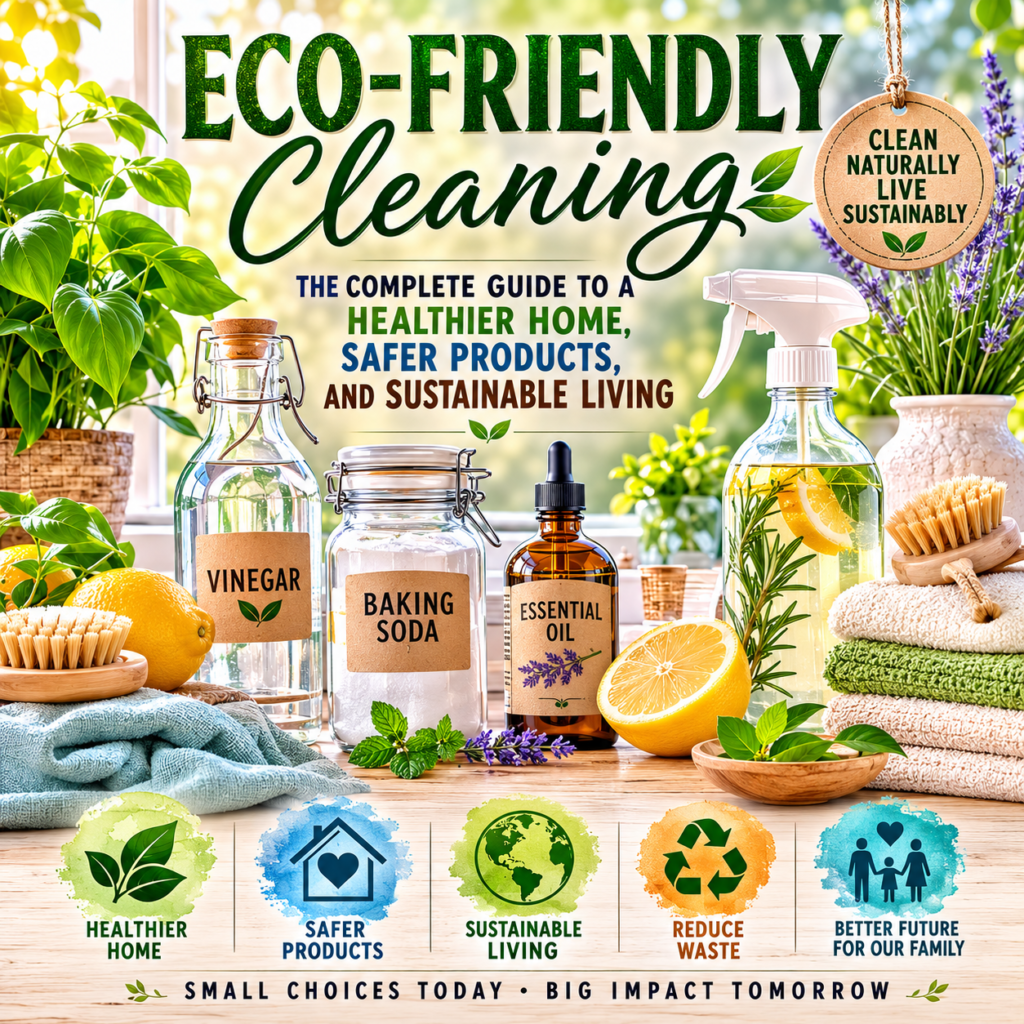
CATEGORY: Eco-Friendly Cleaning
Creating a clean home should never come at the expense of your health or the environment. Traditional cleaning products often contain harsh chemicals that effectively remove dirt and germs but may also contribute to indoor air pollution, skin irritation, and unnecessary environmental waste. Eco-friendly cleaning offers a practical alternative by combining effective cleaning methods with safer ingredients, reusable materials, and sustainable habits that benefit both your household and the planet.
Fortunately, choosing environmentally responsible cleaning methods does not mean sacrificing cleanliness or convenience. Many natural ingredients have been trusted for generations and remain highly effective for everyday household cleaning. Combined with modern eco-friendly products and thoughtful routines, they allow homeowners to maintain spotless living spaces while reducing chemical exposure and minimizing waste.
This comprehensive guide explains what eco-friendly cleaning is, why it matters, and how anyone can begin making sustainable cleaning choices without dramatically changing their daily routine.
What Is Eco-Friendly Cleaning?
Eco-friendly cleaning refers to cleaning methods and products designed to minimize harm to people, animals, and the environment.
Rather than relying on harsh chemicals that may remain in the air or enter waterways, environmentally friendly cleaning emphasizes ingredients that are biodegradable, responsibly sourced, and less harmful when used correctly.
An eco-friendly cleaning routine often focuses on:
- Safer cleaning ingredients.
- Reusable cleaning tools.
- Reduced plastic waste.
- Concentrated products.
- Water conservation.
- Responsible disposal.
- Sustainable purchasing decisions.
The goal is not only a clean home but also a healthier living environment and a smaller environmental footprint.
Why More People Are Choosing Eco-Friendly Cleaning
Interest in sustainable living has grown significantly in recent years.
Many homeowners now recognize that everyday cleaning habits influence indoor air quality, waste production, energy consumption, and long-term environmental health.
Some of the most common reasons people choose eco-friendly cleaning include:
Healthier Indoor Air
Many conventional cleaners release strong chemical vapors that may linger long after cleaning is finished.
Reduced Chemical Exposure
Choosing gentler products may reduce unnecessary exposure for family members and pets.
Environmental Protection
Biodegradable ingredients generally place less strain on ecosystems after entering wastewater systems.
Less Plastic Waste
Reusable containers and refill systems help reduce single-use plastic consumption.
Long-Term Savings
Concentrated cleaners and reusable cloths often reduce household cleaning costs over time.
Understanding Cleaning Versus Disinfecting
One common misunderstanding is that cleaning and disinfecting are the same thing.
In reality, they serve different purposes.
Cleaning
Cleaning removes dirt, grease, dust, food residue, and many microorganisms from surfaces.
Disinfecting
Disinfecting uses products designed to reduce or eliminate certain harmful microorganisms on appropriate surfaces.
For most everyday household maintenance, thorough cleaning is often sufficient. Situations involving illness, food safety, or healthcare settings may require appropriate disinfecting according to manufacturer instructions and local health recommendations.
Common Eco-Friendly Cleaning Ingredients
Many environmentally conscious cleaning routines rely on simple ingredients that have been used successfully for decades.
Popular options include:
White Vinegar
Often used to help remove mineral deposits and soap residue from suitable surfaces.
Baking Soda
Useful as a mild abrasive and deodorizer for many household tasks.
Castile Soap
A plant-based soap frequently used for gentle general cleaning.
Washing Soda
Sometimes used for heavier cleaning jobs and laundry applications.
Citric Acid
Commonly used to help dissolve mineral buildup in suitable applications.
Always follow product directions and confirm compatibility with the surface being cleaned.
Surfaces That Need Special Care
Natural ingredients are not appropriate for every material.
For example, acidic products such as vinegar should generally be avoided on certain natural stone surfaces because they may damage the finish.
Always check manufacturer recommendations before cleaning:
- Marble.
- Granite.
- Limestone.
- Natural wood finishes.
- Waxed surfaces.
- Specialty coatings.
Testing any new cleaner on a small hidden area first is always a sensible precaution.
Choosing Environmentally Responsible Cleaning Products
When purchasing commercial cleaners, look beyond marketing claims.
Consider products that offer:
- Clearly listed ingredients.
- Refillable packaging.
- Concentrated formulas.
- Recyclable containers.
- Biodegradable ingredients.
- Minimal unnecessary fragrances.
- Responsible manufacturing practices.
Reading labels carefully helps consumers make informed decisions rather than relying solely on attractive packaging.
Reducing Waste While Cleaning
Eco-friendly cleaning is about more than choosing different liquids.
Small changes in equipment can significantly reduce household waste.
Helpful alternatives include:
Microfiber Cloths
Washable cloths can replace hundreds of disposable paper towels.
Refillable Spray Bottles
Buying concentrates instead of multiple ready-to-use bottles reduces plastic consumption.
Reusable Mop Pads
Machine-washable pads help eliminate disposable alternatives.
Durable Brushes
Quality cleaning tools often last for years when properly maintained.
Creating a Sustainable Cleaning Routine
Consistency often matters more than intensive deep cleaning.
A practical weekly routine may include:
- Dusting frequently used surfaces.
- Vacuuming or sweeping floors.
- Wiping kitchen counters.
- Cleaning bathroom fixtures.
- Washing reusable cloths.
- Emptying recycling bins.
- Spot-cleaning spills immediately.
Regular maintenance reduces the need for aggressive cleaning methods later.
Safe Storage Practices
Even environmentally friendly products require responsible storage.
Keep all cleaning products:
- In their original containers whenever possible.
- Clearly labelled.
- Away from children.
- Away from pets.
- Stored according to manufacturer instructions.
Never mix different cleaning products unless the manufacturer specifically states that doing so is safe.
Small Daily Habits That Make a Big Difference
Sustainability often comes from simple habits repeated consistently.
Examples include:
- Removing shoes indoors to reduce dirt.
- Cleaning spills immediately.
- Using washable cloths instead of disposable wipes.
- Washing full loads of cleaning cloths.
- Choosing refill packs whenever available.
- Avoiding unnecessary product use.
These habits reduce both cleaning time and environmental impact.
Benefits Beyond the Home
Choosing eco-friendly cleaning products benefits more than the immediate household.
Responsible purchasing can encourage manufacturers to develop more sustainable packaging, reduce unnecessary chemicals, and improve production practices.
Every small decision contributes to broader efforts aimed at reducing pollution, conserving resources, and creating healthier communities.
Final Thoughts
Eco-friendly cleaning is not about achieving perfection or replacing every product overnight. Instead, it is a gradual process of making thoughtful choices that improve the health of your home while reducing unnecessary environmental impact. By selecting safer products, using reusable cleaning tools, maintaining regular cleaning routines, and reducing waste wherever possible, homeowners can create living spaces that are both exceptionally clean and more sustainable.
Every environmentally responsible decision, no matter how small, contributes to a healthier household and a cleaner planet. Over time, these simple habits become second nature, proving that effective cleaning and environmental responsibility can work hand in hand.
—
The End
HavenBearing.com
 Discover More From Our Family of Websites
 ZodiacBearing (Astrology, Tarot, Numerology, Angel Numbers & Spiritual Guidance)
 Velourana (Beauty, Makeup, Hair Care, Skincare & Beauty Tips)
 HavenBearing (Home, Living, Organization, Décor & Everyday Inspiration)
 PawBearing (Pet Care, Dog Breeds, Animal Health, Training & Pet Products)
 PsyCatherine (Notes From the Journal of a Psychologist on Real Life)