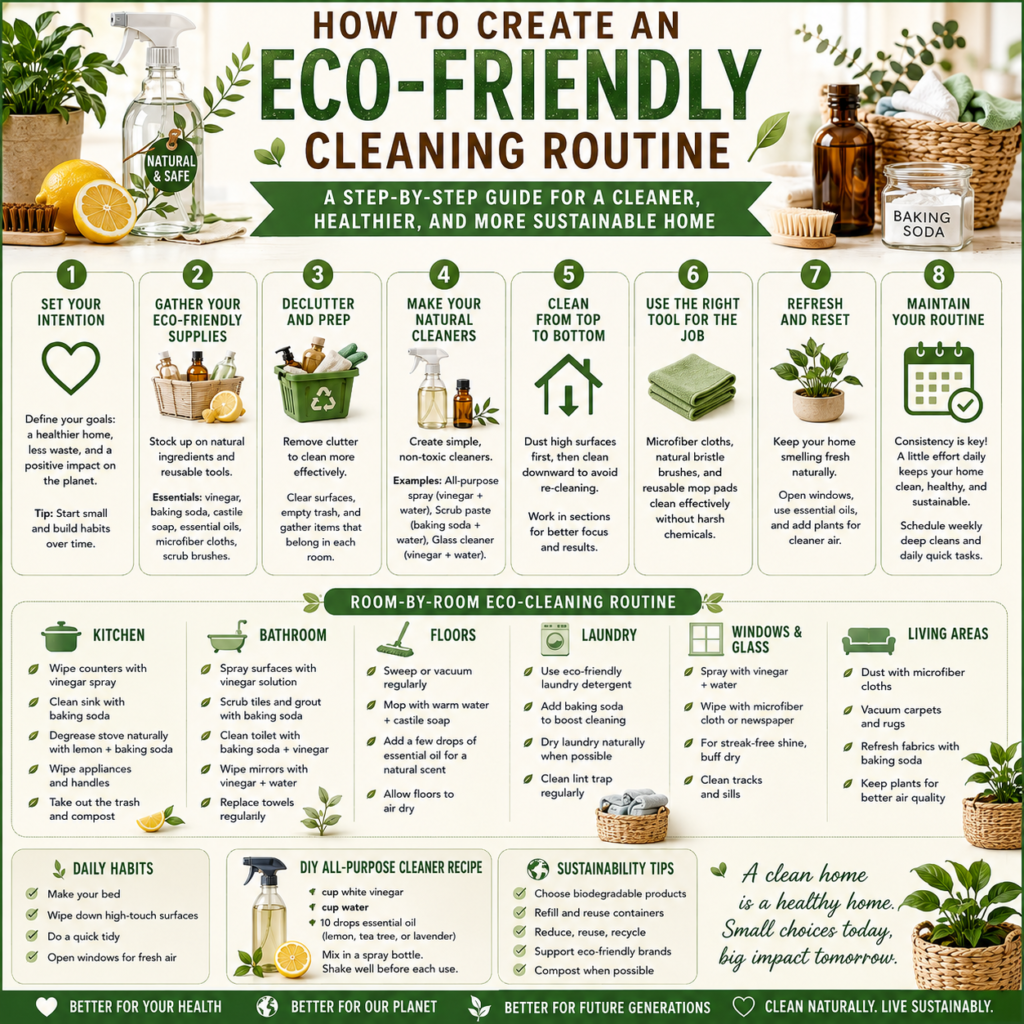
CATEGORY: Eco-Friendly Cleaning
The kitchen is often described as the heart of the home. It is where meals are prepared, families gather, and countless daily activities take place. Because it is one of the busiest rooms in any house, it also requires regular cleaning to maintain hygiene, food safety, and a pleasant environment. Unfortunately, kitchens are also where many households use the largest number of cleaning products, disposable wipes, paper towels, and plastic packaging.
Eco-friendly kitchen cleaning offers a smarter approach. By adopting sustainable habits, selecting environmentally responsible products, reducing unnecessary waste, and maintaining consistent routines, homeowners can keep their kitchens exceptionally clean while minimizing their impact on the environment.
A sustainable kitchen is not about perfection or eliminating every conventional product overnight. Instead, it is about making informed choices that improve cleanliness, reduce waste, and support healthier living for everyone in the household.
This guide explains how to clean every part of your kitchen using environmentally responsible methods while maintaining the high hygiene standards required for safe food preparation.
Why Eco-Friendly Kitchen Cleaning Matters
The kitchen is one of the few places where cleaning products regularly come into close contact with food preparation areas.
For this reason, many homeowners prefer products that are designed for routine household use and that are appropriate for surfaces where food is prepared, always following the manufacturer’s instructions.
An eco-friendly approach also helps:
- Reduce unnecessary plastic waste.
- Minimize disposable product use.
- Encourage reusable cleaning tools.
- Support better indoor air quality.
- Reduce excessive product consumption.
- Create a healthier cleaning routine.
Consistent daily maintenance often reduces the need for stronger cleaning methods later.
Build Daily Kitchen Habits
The easiest kitchen to clean is one that never becomes heavily soiled.
Simple daily habits can prevent grease, food residue, and clutter from accumulating.
Helpful routines include:
Wipe Worktops After Every Meal
Cleaning food preparation areas promptly helps maintain hygiene and prevents stains from becoming more difficult to remove.
Wash Dishes Regularly
Avoid allowing dishes to accumulate in the sink.
Clean Spills Immediately
Fresh spills are almost always easier to remove than dried residue.
Empty Food Waste Frequently
Removing food waste promptly helps discourage unpleasant odors and pests.
Choosing Eco-Friendly Cleaning Products
Many environmentally conscious cleaning products are specifically formulated for kitchen use.
Look for products that offer:
- Clearly listed ingredients.
- Recyclable packaging.
- Concentrated refill options.
- Responsible manufacturing practices.
- Products suitable for kitchen surfaces.
Always verify that the cleaner is appropriate for the surface you intend to clean.
Cleaning Kitchen Countertops
Kitchen worktops are among the most frequently used surfaces in any home.
Cleaning methods depend on the countertop material.
Suitable care includes:
- Removing crumbs first.
- Cleaning with an appropriate product.
- Drying surfaces after cleaning.
- Avoiding abrasive tools on delicate finishes.
Natural stone surfaces such as marble or granite often require specialized care, so always follow the manufacturer’s recommendations.
Caring for the Kitchen Sink
The sink experiences constant exposure to food particles, grease, soap, and water.
Daily maintenance helps prevent buildup.
A typical routine includes:
- Rinsing after washing dishes.
- Removing food debris.
- Wiping the faucet.
- Drying excess water where practical.
Keeping the sink clean also helps reduce unpleasant odors.
Eco-Friendly Dishwashing
Dishwashing offers several opportunities to reduce environmental impact.
Simple improvements include:
Use Concentrated Dish Soap
Concentrated formulas often reduce packaging waste.
Wash Full Loads
Dishwashers generally operate most efficiently when fully loaded according to the manufacturer’s guidance.
Avoid Running Water Continuously
When washing dishes by hand, using a filled sink or basin often conserves water compared with leaving the tap running.
Air Dry When Possible
Allowing dishes to dry naturally reduces energy use.
Cleaning Kitchen Appliances
Household appliances benefit from regular maintenance.
Refrigerator
- Remove expired food.
- Wipe shelves regularly.
- Clean door handles frequently.
Microwave
- Wipe food splatters promptly.
- Clean the interior regularly.
- Leave the door open briefly after cleaning to allow moisture to evaporate.
Oven
Clean according to the manufacturer’s instructions before heavy grease accumulates.
Dishwasher
Periodically clean filters and seals as recommended by the manufacturer.
Regular maintenance helps appliances operate efficiently while extending their lifespan.
Floors and High-Traffic Areas
Kitchen floors quickly collect crumbs, dust, and everyday dirt.
An effective routine includes:
- Sweeping or vacuuming regularly.
- Mopping with an appropriate floor cleaner.
- Drying spills immediately.
- Placing washable entrance mats near exterior doors.
Preventing dirt from spreading throughout the home reduces overall cleaning effort.
Reduce Disposable Waste
The kitchen is often the largest source of single-use cleaning products.
Reusable alternatives include:
- Microfiber cloths.
- Washable dishcloths.
- Refillable spray bottles.
- Reusable mop pads.
- Durable scrub brushes.
These items often provide years of service when properly maintained.
Responsible Recycling Habits
A clean kitchen also supports effective recycling.
Helpful practices include:
- Rinsing recyclable containers when appropriate.
- Flattening cardboard packaging.
- Separating recyclable materials according to local guidelines.
- Keeping recycling bins clean.
Well-organized recycling stations make sustainable habits easier to maintain.
Organize Cleaning Supplies
Keeping supplies organized saves both time and money.
Store products:
- Together in one location.
- Clearly labelled.
- Out of reach of children.
- Away from food storage.
- According to manufacturer recommendations.
Regularly checking supplies also helps avoid purchasing unnecessary duplicates.
Save Water Every Day
Small adjustments in water use quickly add up.
Examples include:
- Filling a bowl for rinsing instead of running the tap continuously.
- Repairing leaking faucets.
- Using efficient dishwasher cycles when appropriate.
- Cleaning spills promptly before additional washing becomes necessary.
Water conservation is an important part of sustainable household management.
Avoid Cross-Contamination
Food safety remains a priority regardless of which cleaning products are used.
Good practices include:
- Using separate cloths for food preparation areas and other household tasks.
- Washing reusable cloths regularly.
- Cleaning cutting boards according to the manufacturer’s guidance.
- Following food safety recommendations for surfaces that come into contact with raw foods.
Maintaining organized cleaning routines helps reduce the risk of cross-contamination.
Create a Weekly Kitchen Cleaning Schedule
Rather than tackling everything at once, spread larger jobs throughout the week.
For example:
Daily
- Wipe counters.
- Wash dishes.
- Empty food waste.
Weekly
- Mop floors.
- Clean appliance exteriors.
- Wipe cabinet fronts.
- Organize the refrigerator.
Monthly
- Deep-clean appliances.
- Check pantry shelves.
- Clean inside cabinets.
- Inspect recycling areas.
Breaking tasks into manageable sections keeps the kitchen consistently clean without becoming overwhelming.
Final Thoughts
An eco-friendly kitchen is built on thoughtful habits rather than complicated routines. By cleaning regularly, choosing environmentally responsible products, reducing disposable waste, conserving water, and maintaining organized workspaces, homeowners can create kitchens that are both exceptionally hygienic and more sustainable.
The beauty of eco-friendly kitchen cleaning lies in its simplicity. Small changes—such as using reusable cloths, selecting refillable products, cleaning spills immediately, and following consistent routines—can significantly reduce waste while keeping one of the busiest rooms in the home clean, welcoming, and ready for everyday life. Over time, these practical habits benefit not only your household but also the wider environment.
—
The End
HavenBearing.com
 Discover More From Our Family of Websites
 ZodiacBearing (Astrology, Tarot, Numerology, Angel Numbers & Spiritual Guidance)
 Velourana (Beauty, Makeup, Hair Care, Skincare & Beauty Tips)
 HavenBearing (Home, Living, Organization, Décor & Everyday Inspiration)
 PawBearing (Pet Care, Dog Breeds, Animal Health, Training & Pet Products)
 PsyCatherine (Notes From the Journal of a Psychologist on Real Life)