CATEGORY: Eco-Friendly Cleaning
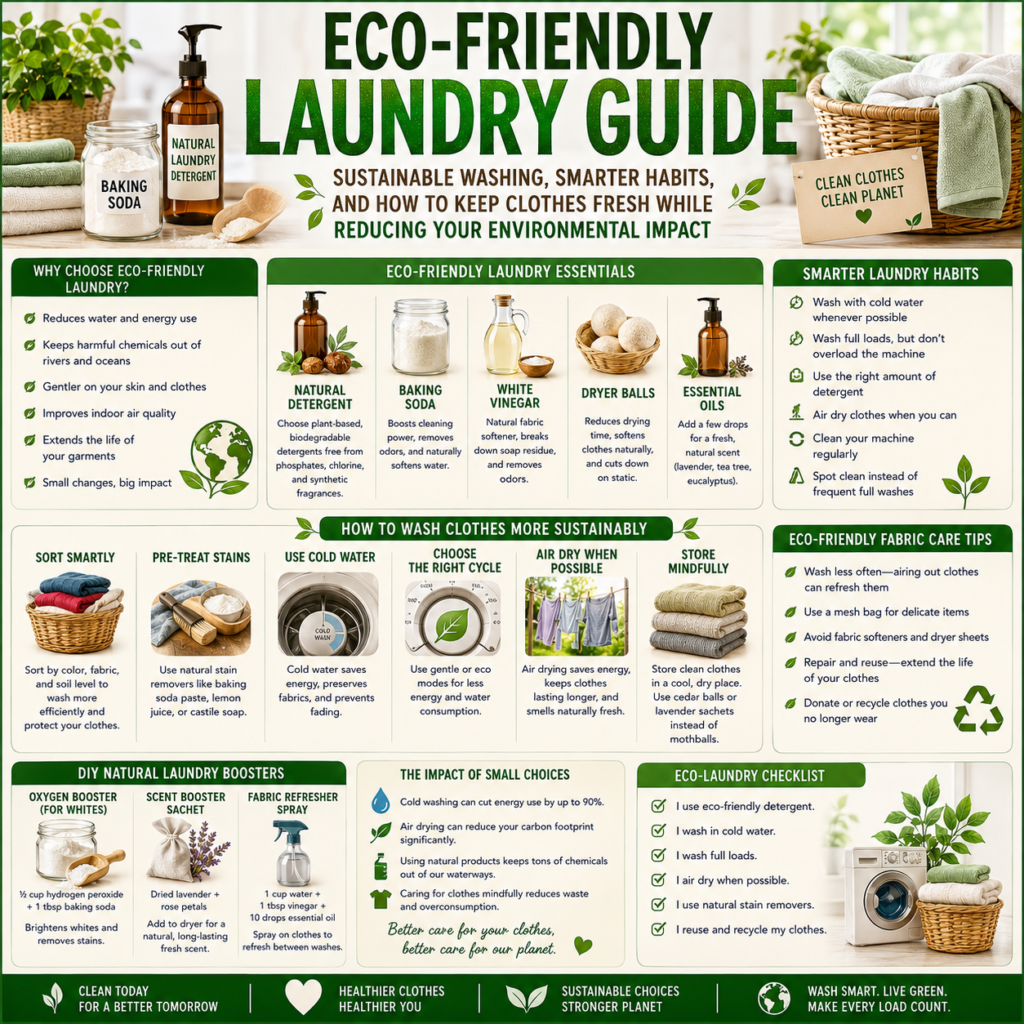
Laundry is an unavoidable part of everyday life. From clothing and towels to bedding and reusable cleaning cloths, every household depends on regular washing to maintain hygiene and comfort. Yet laundry is also one of the largest consumers of water, electricity, detergents, and packaging in the average home. Small adjustments to washing habits can therefore make a significant difference to both household expenses and environmental impact.
Eco-friendly laundry is not about washing less or compromising cleanliness. Instead, it focuses on washing more efficiently, selecting environmentally responsible products, extending the life of fabrics, conserving natural resources, and reducing unnecessary waste. By adopting sustainable laundry habits, homeowners can keep clothes looking their best while supporting a cleaner, healthier planet.
This comprehensive guide explains how to create a more sustainable laundry routine without sacrificing cleanliness, convenience, or fabric care.
Why Eco-Friendly Laundry Matters
Every wash cycle uses resources.
Water, electricity, detergent, and packaging all contribute to the environmental footprint of household laundry.
Making thoughtful choices offers several benefits:
- Conserves water.
- Reduces energy consumption.
- Produces less plastic waste.
- Extends the life of clothing.
- Reduces household costs.
- Supports more sustainable living.
Many of these improvements are surprisingly simple to introduce into everyday routines.
Wash Only When Necessary
One of the easiest ways to reduce environmental impact is to avoid washing clothes unnecessarily.
Not every garment requires cleaning after a single use.
Items such as:
- Jackets.
- Jeans.
- Sweaters.
- Cardigans.
may often be worn multiple times if they remain clean and fresh.
Reducing unnecessary washing also helps fabrics last longer.
Sort Laundry Properly
Sorting clothes before washing improves cleaning performance while protecting fabrics.
Separate laundry according to:
Colour
Wash dark, light, and white fabrics separately where appropriate.
Fabric Type
Delicate materials often require gentler cycles than heavier fabrics.
Soil Level
Heavily soiled items may require different treatment from lightly worn clothing.
Proper sorting reduces colour transfer and unnecessary wear.
Choose an Eco-Friendly Detergent
Many environmentally responsible detergents are now available in supermarkets and online.
Look for products that offer:
- Concentrated formulas.
- Clearly listed ingredients.
- Recyclable packaging.
- Refill options.
- Biodegradable ingredients where applicable.
Always follow the manufacturer’s dosage instructions rather than assuming more detergent will produce better results.
Use the Correct Amount of Detergent
Adding excessive detergent rarely improves cleaning performance.
Instead, it may:
- Leave residue on clothing.
- Require additional rinsing.
- Increase product waste.
- Raise household costs.
The correct amount depends on:
- Load size.
- Water hardness.
- Soil level.
- Manufacturer recommendations.
Measuring detergent carefully benefits both fabrics and the environment.
Wash Full Loads
Running a washing machine at full capacity—without overloading it—is one of the most effective ways to improve efficiency.
Benefits include:
- Lower water use per garment.
- Reduced electricity consumption.
- Less wear on the appliance.
- Fewer wash cycles overall.
Avoid overfilling the drum, as clothes need room to move for effective cleaning.
Choose Lower Temperature Washes When Appropriate
Many modern detergents are designed to clean effectively at lower temperatures.
Lower-temperature washing may help:
- Reduce electricity consumption.
- Protect delicate fabrics.
- Preserve colours.
- Extend garment lifespan.
Always check clothing care labels before selecting a wash temperature, as some items require hotter washes.
Air Dry Whenever Possible
Tumble dryers are convenient but consume significant amounts of energy.
Whenever practical:
- Dry clothes outdoors.
- Use indoor drying racks.
- Take advantage of natural airflow.
- Hang garments promptly after washing to reduce wrinkles.
Air drying also tends to be gentler on fabrics, helping clothing maintain its shape and appearance.
Caring for Delicate Fabrics
Gentle treatment extends the life of clothing.
Helpful habits include:
- Fastening zips before washing.
- Turning printed garments inside out.
- Using laundry bags for delicate items.
- Selecting suitable wash programmes.
- Avoiding unnecessary high-speed spinning for fragile fabrics.
Well-maintained clothing lasts longer, reducing the need for replacement.
Sustainable Laundry Accessories
Eco-friendly laundry extends beyond detergent.
Useful reusable accessories include:
Wool Dryer Balls
Often used to improve air circulation during tumble drying.
Reusable Pegs
Quality pegs last for many years.
Mesh Laundry Bags
Protect delicate fabrics during washing.
Washable Laundry Baskets
Durable storage solutions reduce unnecessary replacements.
Choosing long-lasting accessories reduces waste over time.
Caring for Your Washing Machine
A well-maintained appliance operates more efficiently.
Regular maintenance includes:
- Cleaning detergent drawers.
- Wiping door seals.
- Checking filters.
- Leaving the door slightly open after use to allow drying.
- Following the manufacturer’s maintenance recommendations.
Routine care may improve both washing performance and appliance lifespan.
Reduce Plastic Waste
Laundry products often generate unnecessary packaging.
Simple improvements include:
- Purchasing refill packs.
- Buying concentrated detergents.
- Choosing recyclable containers.
- Refilling existing bottles where available.
Even small packaging reductions become significant over the course of a year.
Washing Reusable Cleaning Cloths
Reusable cloths form an important part of eco-friendly cleaning.
Wash them regularly according to the manufacturer’s care instructions.
Keeping cloths clean helps:
- Maintain hygiene.
- Improve cleaning performance.
- Extend their useful life.
- Reduce disposable paper towel use.
Many microfiber cloths remain effective after hundreds of washes when cared for properly.
Store Laundry Products Safely
All detergents and laundry products should be stored responsibly.
Keep them:
- Out of reach of children.
- Away from pets.
- In their original containers.
- Clearly labelled.
- Protected from excessive heat and moisture.
Always follow storage guidance provided by the manufacturer.
Common Laundry Mistakes
Avoiding simple mistakes improves both cleaning results and sustainability.
Common errors include:
- Overloading the washing machine.
- Using too much detergent.
- Washing lightly worn clothing unnecessarily.
- Ignoring care labels.
- Leaving damp laundry inside the machine for long periods.
- Using the dryer when air drying is practical.
Small improvements quickly become valuable long-term habits.
Building a Sustainable Laundry Routine
A practical eco-friendly laundry schedule might include:
Daily
- Place dirty clothes into sorted laundry baskets.
- Treat fresh stains promptly.
Weekly
- Wash full loads.
- Air dry where possible.
- Fold and store clothing promptly.
Monthly
- Clean the washing machine.
- Check detergent supplies.
- Inspect reusable laundry accessories.
Consistency makes sustainable laundry effortless.
Final Thoughts
Eco-friendly laundry is one of the simplest ways to reduce your household’s environmental footprint without sacrificing cleanliness or convenience. Washing only when necessary, selecting environmentally responsible detergents, using full loads, choosing lower temperatures when appropriate, and air drying whenever possible all contribute to meaningful reductions in water, energy, and waste.
Perhaps the greatest advantage of sustainable laundry is that many environmentally responsible habits also save money while helping clothing last longer. By making thoughtful choices every time you wash, you not only care for your garments but also contribute to a healthier home and a more sustainable future.
—
The End
HavenBearing.com
 Discover More From Our Family of Websites
 ZodiacBearing (Astrology, Tarot, Numerology, Angel Numbers & Spiritual Guidance)
 Velourana (Beauty, Makeup, Hair Care, Skincare & Beauty Tips)
 HavenBearing (Home, Living, Organization, Décor & Everyday Inspiration)
 PawBearing (Pet Care, Dog Breeds, Animal Health, Training & Pet Products)
 PsyCatherine (Notes From the Journal of a Psychologist on Real Life)